| interpretation |
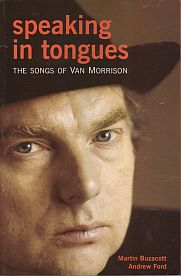
| Martin Buzacott & Andrew Ford |
| Speaking In Tongues |
| The Songs Of Van Morrison |

| publisher: ABC Books |
published: 2005-05 |
ISBN: 0-7333-1297-7 |
| language: english |
format: paperback |
pages: 360 |
dimensions (w*h*d)[mm]: 153 * 233 * 26 |
|
Publisher's press release:
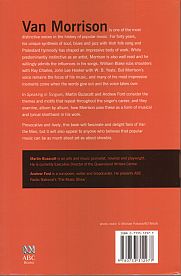
Speaking in Tongues is not another biography of Van Morrison. To date, at least ten of those have been published – two since the start of 2005. But Speaking in Tongues attempts something more ambitious, something rare in pop music and unique in the literature about Morrison: a detailed examination of his words and music, and of how they collide and intersect when he sings them.
Van Morrison will turn 60 this year (August 31). His career now spans more than four decades and its trajectory is strikingly unusual. His first solo album Astral Weeks still seems to feature on everyone's list of the Top 10 Greatest Rock Albums Ever. Yet it's hardly a rock album at all: one of its best tracks, “Cyprus Avenue”, features harpsichord, flute, violin and double bass. At its 1968 release, it did nothing like the trade of the Doors' Waiting for the Sun, or Simon and Garfunkel's Bookends, or Dylan's John Wesley Harding, or the Beatles' “white album”, all released the same year. In 1968 Astral Weeks sold moderately well, and it has sold moderately well ever since. More like a classical record, you might say, than a rock album. More like art than entertainment . . .
So what is the attraction of Morrison's work? And why has it endured? Why, when even his biggest fans mock his surly behaviour, do his concerts still sell out? Why does every other new movie seem to feature one of his songs?
Who, but Morrison, would sing songs that name-check Muddy Waters and William Blake, John Donne and Ray Charles? In which other pop music will you find references to Irish mysticism, Christianity, Zen Buddhism and theosophy?
And if Van Morrison's music isn't rock music, then what on earth is it?
Speaking in Tongues falls into two main parts. Part One, “A Sense of Wonder”, examines the themes and variations in his songs: images of childhood; musical heroes; transcendence and religion; responses to nature and literature; and Morrison's consistently truculent relationship with the rest of the world's population. Building on this exploration of the building blocks of Morrison's work, Part Two, “A Working Man in His Prime”, looks at Morrison's studio work album by album, song and by song. Finally the book returns the reader to the central concern in any Morrison song – the sound of his voice.
Buzacott and Ford write in a lively, engaging and direct manner. They are insightful, opinionated and sometimes very funny, but they are always keen to share their obvious passion for this music with the reader. Above all the authors are fans of “Van the Man” – yet they are demanding fans.
Speaking in Tongues is a critical homage to Van Morrison and his music. It should be read with the sound of his music ringing in your ears. Because that's how it was written.
Martin Buzacott is an arts and music journalist, novelist and playwright. He is currently Executive Director of the Queensland Writers Centre.
Andrew Ford is a composer, writer and broadcaster. He presents The Music Show on ABC Radio National.
| Site © 2002-2014 Günter Becker. All rights reserved. All images are copyright their respective designers. This website is an informational resource for private use only and is not affiliated with Van Morrison, his management company, his record label or any related bodies. The information presented within these pages is based upon information provided by other fans, and Günter Becker takes no responsibility for any problems resulting from use of the material as presented within. |